
Nobody gets excited about a PCS move. You get used to them, sure. But the first few days after orders land feel like someone handed you a thousand-piece puzzle and forgot to include the box.
The moving piece specifically tends to spiral fast because most families do not fully understand their options until they are already in the middle of booking something. So here is the version you actually need before that happens.
The government covers most of your moving costs. How much coverage you get and how it reaches you depends entirely on whether you go the government-arranged route or handle it yourself through a Personally Procured Move. Both are legitimate, both have real advantages, and knowing the difference upfront saves you from making an expensive guess under deadline pressure.
Government-Arranged vs PPM: The Decision That Shapes Everything
These are the two paths available to you when PCS orders arrive and every other moving decision flows from which one you choose.
A government-arranged shipment means the DoD books and pays a licensed contractor directly through the Defense Personal Property System at move.mil. You coordinate dates through your installation’s Transportation Management Office and the financial exposure is minimal because the government handles payment without it ever touching your bank account.
A Personally Procured Move, still widely called a PPM or DITY move, puts you in charge. You hire the company or rent the truck, pay upfront, and submit documentation afterward for reimbursement based on your weight allowance and the distance traveled.
| Quick insight: Families with lighter households and shorter moves sometimes come out ahead financially with a PPM because the government pays you based on what it would have cost them, and you keep any difference left over. |
What Military Moves Actually Cost
Let’s put some real numbers on this because vague estimates do not help when you are trying to budget a cross-country move with a family in tow.
Government-Arranged Shipments
Your out-of-pocket cost for the core move is typically close to zero. The DoD pays the contractor directly and your liability only kicks in if your shipment exceeds your weight allowance. According to move.mil, weight allowances run from 5,000 pounds for junior enlisted members without dependents up to 18,000 pounds for senior officers with dependents.
Motorcycles, boats, and specialty items may involve additional charges worth confirming before move day.
PPM Move Cost Ranges
For a full-service mover on a coast-to-coast move with a three to four bedroom household, expect to pay between $4,000 and $8,000 upfront. Renting a truck and handling the labor yourself typically brings that down to $2,000 to $5,000 depending on fuel and distance.
Reimbursement comes in at approximately 100% of what a government-arranged move would have cost for your specific weight and distance.
Mini reminder worth bookmarking: The expenses that blindside military families most are never the moving company fees. They are the travel costs during the drive, hotels along the route, temporary lodging if your new housing is not ready, and storage fees if your shipment arrives before you do. None of these come from the moving budget. All of them hit your bank account before reimbursement arrives.
Why Military-Experienced Movers Are Worth Seeking Out
A civilian moving company and a military-experienced moving company are not interchangeable, even if both have trucks and reviews.
Military-specialized companies understand PCS paperwork, base access requirements, weight ticket documentation, and the Defense Personal Property System process. A company that handles these routinely processes your move without creating documentation delays that fall back on you to fix.
For PPM moves specifically, official weight tickets from a certified scale are required at both origin and destination for reimbursement. A mover unfamiliar with that requirement can create problems that take weeks to sort out.
Damage Protection: What the Fine Print Actually Says
Every licensed military moving contractor must offer Released Value Protection at no charge. That coverage is $0.60 per pound per item, which sounds fine until you realize a damaged laptop weighing three pounds receives a claim payment of $1.80.
Full Replacement Value Protection covers actual repair or replacement cost and is available for purchase. According to FMCSA consumer guidance, movers are legally required to inform you of both options before the move. For electronics, furniture, and anything genuinely difficult to replace, the upgrade is worth the cost.
| Callout: Before packing day, photograph every room. Open drawers and photograph inside them. Take close-ups of anything with existing scratches or wear. This takes about 20 minutes and saves enormous frustration if a claim becomes necessary. Families who skip this step consistently report worse claim outcomes. |
The PPM Reimbursement Process Without the Confusion
If you go the PPM route, here is exactly what you need for reimbursement.
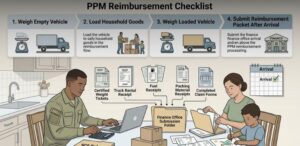
For a PPM move, reimbursement depends on organized documentation, including certified weight tickets, receipts, and completed claim forms.
Official weight tickets from a certified scale, before and after loading. Receipts for all moving-related expenses including truck rental, fuel, and packing materials. Completed claim forms submitted to your finance office after arrival.
The PPM incentive calculator at move.mil lets you estimate your reimbursement before you commit to the PPM path. Running those numbers with a realistic weight estimate is worth doing before you decide which option fits your situation.
Peak Season Is the Real Variable Nobody Plans For
May through August is when the majority of military moves happen. Moving contractor availability tightens significantly during those months and families who wait until 30 days before their move date to start booking frequently end up with limited options and worse scheduling.
Booking more than 60 days out after receiving orders is the single most effective thing you can do to reduce PCS moving stress. It sounds like obvious advice and yet most families do not follow it because other priorities feel more urgent in the first weeks after orders arrive.
Choosing a PPM Mover Without Getting Burned
Not every company that claims military experience has meaningful military experience. Verifying FMCSA registration takes about two minutes at safer.fmcsa.dot.gov and confirms the company holds an active carrier license and authority to operate.
Ask directly whether the company has handled PPM documentation before and get a straight answer about what the quoted price includes versus what generates additional charges at delivery. Military discounts are offered by many companies that regularly serve military markets and are almost never volunteered without being asked.
FAQs
Does the government cover the full cost of a PCS move?
For government-arranged moves, yes on the core shipment up to your weight allowance. Overages and specialty items can generate additional costs.
Can I actually make money on a PPM?
Sometimes yes. If your actual move costs less than the government reimbursement calculation, the difference stays with you. Lighter households and shorter distances make this more likely.
What if something arrives damaged?
For government moves, file through DPS and do it quickly. For PPM moves, the claim goes to the moving company under the coverage you selected at booking. Either way, pre-move documentation dramatically improves outcomes.
When is the right time to start planning?
The day orders arrive. Not the week before the move. Early scheduling matters significantly more during peak season than most families realize until they have missed the window once.
The Housing Question Comes Right After the Moving Question
Once the logistics of getting there are sorted, the question of where to actually live at your next duty station moves to the front of the line. How far does BAH stretch in that market? Is on-base housing worth waiting for? Which neighborhoods do military families actually recommend?
MilHousing Network works through exactly those questions with military families every day, connecting them with vetted, military-friendly real estate professionals at no cost. If your move date is approaching and housing at the other end is still unresolved, reaching out sooner rather than later genuinely helps.