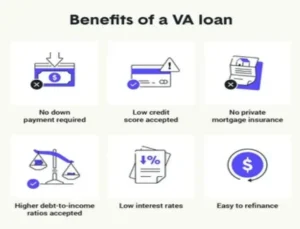

Qualifying for a VA loan requires passing 2 requirements:
- Requirement 1 is VA eligibility, confirmed by your Certificate of Eligibility (COE).
- Requirement 2 is lender underwriting approval, based on your credit history, income, and occupancy plan.
The VA does not set a minimum credit score requirement; lenders evaluate creditworthiness independently and may add their own standards on top. (VA.gov — Home Loan Eligibility; 38 C.F.R. § 36.4340)
The 7 steps to qualify:
- Get your Certificate of Eligibility (COE)
- Understand your COE entitlement
- Meet credit qualification standards
- Meet income, DTI, and residual income standards
- Confirm your occupancy plan
- Confirm the property meets VA appraisal and MPR standards
- Account for funding fee and closing costs
Who qualifies for a VA loan?
4 service categories qualify for a VA-backed home loan: active-duty service members, Veterans, National Guard members, Selected Reserve members, and certain surviving spouses. (VA.gov — Eligibility Requirements; 38 U.S.C. Chapter 37)
Active-duty service members
Active-duty service members qualify after 90 continuous days of active service. (VA.gov — Eligibility Requirements) COE evidence for active-duty members is a statement of service signed by the commanding officer, adjutant, or personnel officer. It must include your name, Social Security number, date of birth, entry date on active duty, duration of any lost time, and the name of the command providing the information.
Veterans
Veteran eligibility depends on when and how long you served. (VA.gov — Eligibility Requirements)
- Wartime service requires at least 90 days of active duty.
- Peacetime service requires at least 181 continuous days of active duty.
- Post-separation Veterans separated after 24 months of continuous service, or the full period for which they were ordered to active duty, may also qualify.
- Discharge characterization affects eligibility; a dishonorable discharge disqualifies a Veteran from VA loan benefits. Other-than-honorable and bad conduct discharges require VA review on a case-by-case basis.
DD Form 214 is the required COE evidence for Veterans; it must show character of service and the narrative reason for separation.
National Guard and Reserve members
National Guard and Selected Reserve members qualify under 2 primary pathways. (VA.gov — Eligibility Requirements)
- Service-length pathway: 6 creditable years in the Selected Reserve or National Guard, with an honorable discharge, placement on the retired list, transfer to the Standby Reserve or an element of the Ready Reserve other than the Selected Reserve, or continued service in the Selected Reserve.
- Activation pathway: Activation under Title 10 or Title 32 orders with a qualifying service duration meets the active-duty threshold directly.
Surviving spouses
Surviving spouses qualify under 4 defined conditions established by the VA. (VA.gov — Eligibility Requirements)
- The Veteran died in service or from a service-connected disability, and the spouse has not remarried.
- The Veteran is officially listed as Missing in Action (MIA).
- The Veteran is a Prisoner of War (POW).
- The surviving spouse receives Dependency and Indemnity Compensation (DIC) and meets VA’s additional eligibility conditions.
Step 1 — Get your Certificate of Eligibility (COE)
The Certificate of Eligibility (COE) is the document that proves your VA loan eligibility and entitlement amount to a lender. (VA.gov — How to Request a COE) COE processing is the first step because no VA-backed loan can move forward without it; a lender cannot submit your loan for VA guaranty without a valid COE on file. Obtaining your COE before house hunting eliminates the single most preventable cause of closing delays during a PCS window.
How to request your COE (3 paths)
3 paths exist to request your COE; each differs in speed and who initiates the request. (VA.gov — How to Request a COE)
- VA.gov online portal (fastest): Veterans, active-duty members, and Guard/Reserve members can request a COE directly through VA.gov using a DS Logon, My HealtheVet, or Login.gov account. Many COEs are issued instantly if service records are already in VA’s system.
- Lender via Web LGY: VA-approved lenders access the Web LGY system to request and retrieve COEs on your behalf during the loan application process.
- Mail using VA Form 26-1880: VA Form 26-1880 (Request for a Certificate of Eligibility) is the paper option. Complete the form and mail it to the VA Regional Loan Center listed on the form. (VA.gov — VA Form 26-1880) Mail processing takes longer than the online or lender pathway and carries the highest timing risk during a PCS move.
What evidence each service category needs?
COE evidence requirements vary by service category; submitting the wrong document is the most common cause of COE processing delays. (VA.gov — How to Request a COE)
- Veterans: DD Form 214 with character of service and narrative reason for separation. If you served multiple periods, include the DD214 for each period.
- Active-duty service members: A statement of service signed by the commanding officer, adjutant, or personnel officer must include name, Social Security number, date of birth, entry date on active duty, duration of any lost time, and command name.
- National Guard members: NGB Form 22 (Report of Separation and Record of Service) for each period of service, plus NGB Form 23 (Retirement Points Accounting) or a copy of your latest retirement points statement.
- Selected Reserve members: A copy of your latest annual retirement points statement and evidence of honorable service, or activation orders if qualifying through a Title 10/Title 32 activation pathway.
- Surviving spouses: VA Form 26-1817 (Request for Determination of Loan Guaranty Eligibility, Unmarried Surviving Spouses) plus the Veteran’s DD Form 214. If receiving DIC, include the DIC award letter.
COE readiness is the fastest way to reduce closing-timeline risk during a short PCS window. Confirm your COE documentation and approval readiness in one step with a Military Home Buying Assessment.
Step 2 — Understand your COE entitlement.
Entitlement is the dollar amount the VA guarantees to your lender if you default on a VA-backed loan. It is not your maximum purchase price, and confusing the two is one of the most common errors in VA loan planning. (VA Pamphlet 26-7, Chapter 3; VA.gov — Loan Limits)
Full entitlement means the VA will guarantee 25% of the loan amount with no county loan limit applied. Most borrowers who have never used a VA loan, or who have paid off a prior VA loan and restored their entitlement, have full entitlement. Remaining entitlement applies when a prior VA loan is still active; it reduces the guaranty amount available and may reintroduce county loan limit considerations depending on loan size.
Your COE shows 3 fields that directly affect your loan qualification profile:
| COE Field | What It Means | Risk If Misunderstood | What To Do Next |
| Entitlement amount | Dollar amount VA guarantees to the lender | Treating entitlement as a purchase price limit | Ask your lender how this figure maps to your target loan amount |
| Entitlement code | Service category used to establish eligibility | Wrong code causes COE processing delays | Verify the code matches your actual service category before submitting |
| Funding fee exemption status | Whether you owe a VA funding fee at closing | Missing an exemption creates an unexpected cash-to-close cost | Provide disability award letter, DIC proof, or Purple Heart documentation to your lender before closing |
Step 3 — Credit qualification: VA standards vs lender overlays
The VA does not set a minimum credit score requirement. Lenders evaluate your full credit history to determine “satisfactory credit risk” under VA guidelines, and many lenders impose their own minimum score overlays on top of that standard. (38 C.F.R. § 36.4340; VA Pamphlet 26-7, Chapter 4)
“Satisfactory credit risk” is VA’s creditworthiness standard; it evaluates the borrower’s overall credit history, pattern of debt repayment, and financial behavior rather than a single FICO score cutoff. (38 C.F.R. § 36.4340) VA’s standard means two borrowers with identical FICO scores can receive different underwriting outcomes depending on the depth and pattern of their credit history.
Lender overlays are credit requirements that individual lenders add above VA’s baseline standard. (VA Pamphlet 26-7, Chapter 4) Overlays are lender-controlled; the VA does not publish or regulate them, which means qualification requirements vary from lender to lender, even for the same VA loan product. Common overlay categories include:
- Minimum FICO score thresholds (ask each lender directly for their floor)
- Cash reserve requirements post-closing (liquid assets remaining after down payment and closing costs)
- Manual underwriting triggers (conditions that route your file to manual review)
- DTI ceiling overlays that are stricter than VA’s 41% review threshold
Credit report review is a mandatory underwriting step. VA guidance directs lenders to obtain a tri-merge credit report covering all 3 major bureaus: Equifax, Experian, and TransUnion. (VA Pamphlet 26-7, Chapter 4) Derogatory credit items, late payments, collections, bankruptcies, and foreclosures are evaluated in the context of the full credit profile, not as automatic disqualifiers.
PCS moves create a specific credit risk: a hard credit pull during house hunting starts a clock on your credit inquiry window. Switching lenders mid-escrow after an offer is accepted resets that clock and may trigger a new overlay review. Ask each lender for their minimum score overlay, reserve requirement, and manual underwriting triggers before submitting a full application.
Step 4 — Income, DTI, and residual income
VA underwriting evaluates 3 income factors to determine ability to repay: stable verified income, debt-to-income ratio (DTI), and residual income, the monthly income remaining after all major expenses are paid. (VA Pamphlet 26-7, Chapter 4; 38 C.F.R. § 36.4340)
Stable verified income
Stable income is the foundation of VA underwriting. Lenders must verify that your income is reliable, predictable, and likely to continue for at least 3 years from the date of the loan application. (VA Pamphlet 26-7, Chapter 4) Active-duty base pay qualifies as stable income. BAH (Basic Allowance for Housing) and BAS (Basic Allowance for Subsistence) are non-taxable allowances; lenders may gross up non-taxable income when calculating qualifying income, which increases the effective income figure used in underwriting. Secondary income sources, overtime, bonuses, part-time employment, and rental income require a documented 2-year history to count toward qualifying income.
Debt-to-income ratio (DTI)
DTI is calculated by dividing total monthly debt obligations by gross monthly income. VA guidance identifies 41% as the threshold above which additional compensating factors are required. (38 C.F.R. § 36.4340) A DTI above 41% does not automatically disqualify a borrower; lenders may approve loans above that threshold when residual income is strong and compensating factors are documented. DTI is a lender-evaluated metric, and individual lender overlays may apply a stricter ceiling than VA’s 41% review trigger.
Residual income
Residual income is VA’s primary affordability measure. It is the net monthly income remaining after subtracting the proposed mortgage payment, all monthly debt obligations, estimated maintenance and utility costs, and federal income taxes. (VA Pamphlet 26-7, Chapter 4) Residual income requirements are set by VA in tables that vary by loan size and geographic region. The 4 regions are Northeast, Midwest, South, and West. A borrower whose DTI exceeds 41% but whose residual income exceeds the VA regional table requirement by 20% or more may still receive approval. Residual income is the underwriting concept most commonly absent from generic VA loan guides and the most important one for PCS buyers managing tight monthly budgets after a move.
Use VA’s home loan affordability resources at VA.gov — Home Loan Resources to estimate your income-to-payment ratio before approaching a lender.
Step 5 — Occupancy rules (primary residence requirement)
VA purchase loans require the borrower to occupy the property as a primary residence. VA guidelines identify 60 days after closing as the reasonable timeframe for move-in, with documented exceptions available for active-duty and PCS situations. (VA Pamphlet 26-7, Chapter 4)
Primary residence requirement
Primary residence occupancy is a VA loan condition; the benefit is not available for investment properties, vacation homes, or second homes. (VA Pamphlet 26-7, Chapter 4) Occupancy must be established by the borrower personally, a spouse, or a dependent child occupying the property, which satisfies the requirement when the service member cannot occupy due to active-duty orders.
The 60-day occupancy guideline
60 days is VA’s defined “reasonable time” standard for occupancy after closing. Lenders use this as the baseline when evaluating occupancy compliance. (VA Pamphlet 26-7, Chapter 4) Occupancy beyond 60 days requires a documented future event, such as a confirmed report date, discharge date, or dependent school schedule, to justify the delay. VA guidance recognizes that active-duty service creates legitimate occupancy exceptions, but documentation is required to support the exception at underwriting.
Documented occupancy exceptions
3 occupancy exception scenarios are recognized under VA guidance, each requiring supporting documentation: (VA Pamphlet 26-7, Chapter 4)
- Active-duty PCS delay: Service member is stationed at a location that prevents immediate occupancy; spouse or dependent child occupancy satisfies the requirement, or a confirmed future report date documents the timeline.
- Deployment: Service member deploys before or shortly after closing; spouse or dependent child occupancy satisfies the requirement during deployment.
- Pre-discharge purchase: Service member purchases before discharge is finalized; confirmed discharge date and intent to occupy immediately after separation satisfy the exception with documentation.
VA occupancy exceptions are not automatic; each exception requires the lender to document the specific circumstances and future occupancy event in the loan file. Borrowers who cannot satisfy the occupancy requirement within the documented exception window risk benefit compliance issues.
PCS timing creates a specific occupancy planning risk: buying a property you cannot occupy within a reasonable period and cannot document an exception for exposes you to both lender denial and VA benefit misuse risk. If your PCS timeline creates an occupancy gap or a sell-vs-rent decision on a prior VA-financed home, review the Accidental Landlord Advisory before committing to a course of action.
Step 6 — Property qualification: VA appraisal and MPRs
VA requires a VA appraisal on every purchase loan. It is not a home inspection and does not replace one. (VA Pamphlet 26-7, Chapter 11; VA.gov — Minimum Property Requirements) The VA appraisal serves 2 functions: establishing the property’s reasonable value and confirming the home meets VA Minimum Property Requirements (MPRs). A home inspection evaluates the condition of the property’s systems and components. It is a separate, optional (but strongly recommended) step that the VA appraisal does not replicate.
VA appraisal and the Notice of Value (NOV)
The Notice of Value (NOV) is the output document of a VA appraisal. It establishes the estimated reasonable value of the property and is used by the lender to determine the maximum loan amount the VA will guarantee on that transaction. (VA Pamphlet 26-7, Chapter 11)
VA appraisers are assigned by the VA; neither the borrower nor the lender selects the appraiser. (VA Pamphlet 26-7, Chapter 11) Appraisal timelines vary by market and appraiser availability in high-demand markets near military installations; appraisal scheduling delays are a documented PCS closing risk.
Minimum Property Requirements (MPRs)
MPRs are VA’s baseline property condition standards. They define the minimum level of safety, sanitation, and structural integrity a property must meet to be eligible for VA loan financing. (VA.gov — Minimum Property Requirements) MPR categories include:
- Space and structure: The property must have adequate living space and a structurally sound foundation, roof, and exterior.
- Mechanical systems: Heating, electrical, and plumbing systems must be in safe working order and adequate for the property’s size.
- Roofing: The roof must prevent moisture entry and have a remaining useful life.
- Water and sanitation: The property must have a safe, potable water supply and a functioning sewage disposal system.
- Access: The property must have safe pedestrian and vehicular access from a public or private street.
MPR failures identified during the VA appraisal must be resolved before the loan can close — either through seller repairs, escrow holdbacks in limited cases, or price renegotiation. (VA Pamphlet 26-7, Chapter 11) MPR conditions are distinct from inspection findings; a property can pass all MPRs and still have significant system deficiencies that only a home inspection would identify.
VA appraisal vs home inspection
| VA Appraisal | Home Inspection | |
| Purpose | Establishes reasonable value + MPR compliance | Evaluates the condition of systems and components |
| Who orders it | Lender (VA-assigned appraiser) | Buyer (inspector of buyer’s choice) |
| What it checks | Value + safety/sanitation/structural minimums | HVAC, plumbing, electrical, roof, and foundation detail |
| Output | Notice of Value (NOV) | Inspection report |
| Required for VA loan | Yes | No (strongly recommended) |
| Can delay closing | Yes, MPR conditions must be resolved | No, findings are informational |
Appraisal and MPR readiness directly affect PCS closing timelines. A failed MPR condition identified after contract execution creates repair negotiation delays that can push closing past a report date. Assess MPR and inspection readiness before submitting an offer through a Military Home Buying Assessment.
Step 7 — Costs that affect your approval: funding fee and closing costs
Cash-to-close miscalculation is one of the most common causes of last-minute VA loan closing failures. 2 cost categories require specific planning: the VA funding fee and closing costs, including seller concessions. (VA.gov — Funding Fee and Closing Costs; VA Pamphlet 26-7, Chapter 8)
VA funding fee
The VA funding fee is a one-time upfront cost required on most VA-backed loans. It is paid at closing or financed into the loan amount. (VA.gov — Funding Fee and Closing Costs) Funding fee rates vary by 3 factors: loan type (purchase, construction, cash-out refinance, IRRRL, or assumption), whether it is your first or subsequent use of the VA loan benefit, and your down payment amount. Financing the funding fee into the loan increases the total loan amount and the monthly payment; borrowers should calculate both scenarios before closing.
Funding fee exemptions apply to 4 borrower categories. If you qualify, the exemption eliminates the fee entirely: (VA.gov — Funding Fee and Closing Costs)
- Veterans receiving VA compensation for a service-connected disability
- Veterans rated eligible to receive compensation but receiving retirement or active-duty pay instead
- Surviving spouses receiving Dependency and Indemnity Compensation (DIC)
- Service members with a proposed or memorandum rating of service-connected disability before loan closing, including Purple Heart recipients on active duty, with evidence presented by closing
Exemption documentation must be provided to the lender before closing: a disability award letter, a DIC award letter, or a Purple Heart order, with supporting medical evidence, satisfies the requirement depending on the exemption category.
The funding fee rate table below reflects VA’s published rates. Verify current rates at VA.gov — Funding Fee Tables before closing, as rates are subject to legislative change.
| Loan Use | Down Payment | Fee Rate |
| First use | Less than 5% | 2.15% |
| First use | 5% or more | 1.50% |
| First use | 10% or more | 1.25% |
| Subsequent use | Less than 5% | 3.30% |
| Subsequent use | 5% or more | 1.50% |
| Subsequent use | 10% or more | 1.25% |
| Exempt (any category above) | Any | 0% |
Rates from VA.gov — Funding Fee Tables — last updated January 15, 2026.
Closing costs and seller concessions
Closing costs on a VA loan fall into 2 categories: VA-allowable fees and non-allowable fees. (VA Pamphlet 26-7, Chapter 8) VA-allowable fees include the VA appraisal fee, credit report fee, title insurance, origination fee (capped at 1% of the loan amount), recording fees, and discount points. Non-allowable fees, charges that VA prohibits the borrower from paying, must be paid by the seller or lender.
Seller concessions are capped at 4% of the NOV reasonable value, not 4% of the purchase price, and not 4% of total closing costs. (VA Pamphlet 26-7, Chapter 8) Seller concessions under VA rules include payment of the funding fee, prepayment of taxes and insurance, payoff of credit balances or judgments, and gifts such as appliances. They do not include standard closing cost credits, which are treated separately. A seller concession exceeding the 4% cap causes the lender to reject that contract term; catching this error after offer acceptance creates renegotiation delays that directly threaten PCS closing timelines.
| Cost Item | Who Sets It | Can Be Financed? | PCS Risk If Missed |
| VA funding fee | VA (by statute) | Yes, into the loan amount | Unexpected cash-to-close shortfall at closing |
| Origination fee (max 1% of loan) | Lender (VA-capped) | No | Underestimated closing costs |
| Discount points | Lender | No | Higher interest rate costs over the loan life |
| Seller concessions (max 4% of NOV) | Negotiated (VA-capped) | N/A, seller pays | Concession exceeds cap → lender rejects contract term |
| VA appraisal fee | VA-assigned appraiser | No | Delayed NOV = missed closing date |
| Title insurance | Market/lender | No | Closing delay if not arranged early |
Document checklist for preapproval (PCS-ready)
A complete VA loan preapproval packet contains 5 document categories; assembling all 5 before approaching a lender eliminates the most common source of underwriting back-and-forth during a time-limited PCS window. (VA.gov — How to Request a COE; VA Pamphlet 26-7, Chapter 4)
Category 1: COE evidence documents
COE evidence is the first document category; the specific form required depends on your service category:
- Veterans: DD Form 214 with character of service and narrative reason for separation (one per service period)
- Active-duty service members: Statement of service signed by commanding officer, adjutant, or personnel officer includes name, SSN, date of birth, entry date, lost time, and command name
- National Guard members: NGB Form 22 (Report of Separation and Record of Service) plus NGB Form 23 (Retirement Points Accounting) or latest retirement points statement
- Selected Reserve members: Latest annual retirement points statement plus evidence of honorable service, or activation orders if qualifying through the Title 10/Title 32 pathway
- Surviving spouses: VA Form 26-1817 plus the Veteran’s DD Form 214 and DIC award letter if applicable
Category 2: Income verification documents
Income documentation establishes stable, verified income for VA underwriting. Lenders require the following standard set: (VA Pamphlet 26-7, Chapter 4)
- Most recent 30 days of pay stubs (Leave and Earnings Statement for active-duty members)
- W-2 forms for the past 2 years
- Federal tax returns for the past 2 years (all schedules)
- Most recent military orders if income includes BAH or BAS allowances
- Documentation of secondary income sources (overtime, part-time, rental) covering a 2-year history, if using that income to qualify
Category 3: Asset and reserve statements
Asset statements confirm cash-to-close availability and satisfy lender reserve requirements. The standard documentation set includes:
- Most recent 2 months of bank statements (all pages, all accounts)
- Most recent retirement or investment account statements, if using those assets
- Gift letter and donor bank statement if any portion of the closing funds is a gift
- Documentation of any large deposits within the past 60–90 days (lenders require sourcing for unexplained deposits)
Category 4: Military-specific forms
Military-specific forms address service verification, occupancy exceptions, and entitlement documentation beyond the COE itself:
- Copy of current military orders (confirms duty station, report date, and PCS timeline for occupancy exception documentation)
- Reenlistment or extension orders if your service commitment covers the full loan term
- Activation orders for Guard/Reserve members qualifying through the Title 10/Title 32 pathway
- VA Form 26-1880 if requesting COE by mail or requesting entitlement restoration
Category 5: Funding fee exemption evidence
Funding fee exemption evidence eliminates the funding fee from cash-to-close calculations. Submit this documentation to your lender before closing if any exemption category applies: (VA.gov — Funding Fee and Closing Costs)
- Service-connected disability: VA disability award letter confirming compensation eligibility
- DIC surviving spouse: DIC award letter from VA
- Purple Heart recipient on active duty: Purple Heart orders plus supporting medical evidence of service-connected condition presented before closing
- Proposed or memorandum disability rating: Proposed rating letter or memorandum rating from VA confirming service-connected disability determination prior to closing
Exemption documentation submitted after closing does not retroactively eliminate the funding fee. Confirm exemption status and submit evidence to your lender before the closing disclosure is issued.
Questions to ask your lender before you apply
4 questions expose lender overlay requirements that VA rules alone do not reveal. Ask these before submitting a full application to avoid hard credit pulls, mid-escrow lender switches, and last-minute denial surprises during a PCS window. (VA Pamphlet 26-7, Chapter 4; 38 C.F.R. § 36.4340)
Question 1: “Do you have a minimum credit score overlay for VA loans?”
Lender overlays on credit score are the most common source of VA loan denial for borrowers who assume VA’s “no minimum score” standard applies universally. (VA Pamphlet 26-7, Chapter 4) VA does not set a universal score floor, but individual lenders do, and those overlays are not published or standardized. Asking this question before the application identifies whether your current credit profile meets that lender’s threshold before a hard pull is initiated. Lenders who cannot answer this question directly or who deflect to “VA guidelines” are signaling that their overlay policies are not transparent. That is a meaningful vetting signal for a PCS buyer with a narrow timeline.
Question 2: “How do you evaluate income stability for active-duty PCS moves?”
Income stability evaluation varies between lenders for borrowers whose BAH rate, duty station, and pay grade are changing due to PCS orders. (VA Pamphlet 26-7, Chapter 4) BAH is a non-taxable allowance; lenders may gross it up differently when calculating qualifying income, and some lenders apply overlays requiring a minimum time-in-grade or time-at-duty-station before counting BAH at the new rate. Active-duty borrowers mid-PCS face the specific risk of qualifying on current BAH but closing after a BAH rate change takes effect. Ask the lender how they handle income recalculation between pre-approval and closing if a PCS move is in progress.
Question 3: “How do you handle occupancy exceptions beyond 60 days?”
Occupancy exception handling is lender-specific. VA guidance establishes the 60-day reasonable time standard and recognizes documented exceptions, but individual lenders determine what documentation satisfies their underwriting requirements for exceptions beyond that window. (VA Pamphlet 26-7, Chapter 4) Active-duty borrowers purchasing before a report date, during deployment, or before discharge are the most common exception scenarios. Lenders who require specific documentation formats, command letters, orders with hard report dates, or spouse occupancy certifications need to communicate those requirements before contract execution, not after. A lender who cannot articulate their occupancy exception process is a timeline risk for any active-duty buyer.
Question 4: “How do you calculate seller concessions vs closing cost credits?”
Seller concessions and closing cost credits are treated differently under VA rules, and lender confusion between the two is a documented source of contract renegotiation delays. (VA Pamphlet 26-7, Chapter 8) VA caps seller concessions at 4% of the NOV reasonable value. This cap covers payment of the funding fee, prepayment of taxes and insurance, payoff of debts, and similar items. Standard closing cost credits from the seller, such as contributions toward origination fees, title insurance, or appraisal fees, are treated separately and are not counted against the 4% concessions cap. Lenders who conflate these 2 categories may miscalculate your net cash-to-close or incorrectly flag a seller credit as a concessions cap violation. Either error can delay or kill a closing. Ask this question before making an offer so your agent structures the contract correctly from the start.
H2: Military terms that mean something different in mortgages
- Rate = Interest rate (not Navy rate).
- Title = Property title/Title insurance (not job title).
- Points = Discount points (not career points).
- Reserve = Selected Reserve vs cash reserves = military discharge status (not medical/financial discharge).
VA loan transactions move faster near military installations than in civilian markets. Document turnaround expectations, appraisal scheduling, and closing timelines are all compressed by PCS report dates. Misreading any of these 6 terms in a compressed timeline creates errors that are difficult to reverse after contract execution.
FAQs
Is it hard to get approved for a VA loan?
Approval difficulty depends on 3 factors: COE status, lender underwriting standards, and property eligibility, not on a single credit score threshold. (VA Pamphlet 26-7, Chapter 4; VA.gov — Eligibility Requirements)
The 4 most common VA loan approval failures are:
- COE documentation gaps: Wrong evidence submitted for service category, missing DD Form 214, or incorrect entitlement code. Each delays or blocks COE issuance before underwriting begins.
- Lender overlay misalignment: Borrower’s credit profile meets VA’s “satisfactory credit risk” standard but falls below the lender’s proprietary score overlay. Switching lenders resets the credit pull clock and risks timeline compression.
- Occupancy plan documentation failure: Occupancy intent beyond 60 days without a documented future event, job transfer confirmation, hard report date, or discharge timeline triggers lender denial on occupancy grounds.
- Cash-to-close miscalculation: Funding fee exemption status not confirmed before closing disclosure, seller concessions structured above the 4% NOV cap, or reserve requirements not met post-closing.
VA loan approval rates are consistently higher than conventional loan approval rates for comparable borrower profiles. The VA guaranty reduces lender risk, which is why VA-backed loans have historically outperformed FHA and conventional products on approval rates for active-duty and Veteran borrowers. The difficulty is not the VA standard itself; it is the variability introduced by lender overlays and documentation gaps that are preventable with preparation.
If my father were a veteran, could I get a VA loan?
No. VA loan eligibility does not transfer to dependent children of Veterans. (VA.gov — Eligibility Requirements) Eligible borrower categories are limited to Veterans, active-duty service members, qualifying National Guard and Selected Reserve members, and certain surviving spouses. Biological or adopted children of Veterans are not an eligible category regardless of the Veteran parent’s service record or disability status.
Dependent children of Veterans who are not independently eligible through their own military service have 3 primary mortgage alternatives:
- FHA loans: Federal Housing Administration-backed loans with a 3.5% minimum down payment for borrowers with a credit score of 580 or higher. (FHA.gov — FHA Loan Requirements)
- USDA loans: U.S. Department of Agriculture Rural Development loans for eligible rural and suburban properties with no down payment requirement for qualifying borrowers. (USDA.gov — Single Family Housing Guaranteed Loan Program)
- Conventional loans: Standard mortgage products with down payment requirements starting at 3% for first-time buyers through programs such as Fannie Mae HomeReady and Freddie Mac Home Possible.
Surviving spouses are the only family-relationship pathway to VA loan eligibility, and only under the 4 specific conditions defined by VA (death in service, service-connected death, MIA/POW status, or DIC eligibility). Wasted application time and hard credit pulls from applying for a VA loan without confirmed eligibility are preventable. Confirm eligibility at VA.gov — Eligibility Requirements before approaching any lender.
Conclusion + CTA Hub
Qualifying for a VA loan comes down to 2 requirements and 7 steps. VA eligibility is confirmed by your Certificate of Eligibility, followed by lender underwriting approval across credit, income, occupancy, and property standards. (VA.gov — Home Loan Eligibility; VA Pamphlet 26-7)
Document readiness is the single highest-leverage action a PCS buyer can take before approaching a lender. COE evidence assembled by service category, income documentation complete, funding fee exemption status confirmed, and occupancy plan documented. Borrowers who arrive at a lender with a complete preapproval packet move through underwriting faster, encounter fewer back-and-forth requests, and close on time at a higher rate than borrowers who assemble documents reactively during escrow.
Lender overlay awareness is the second-highest-leverage action; VA’s baseline standards do not govern what individual lenders require above them. Credit score floors, reserve requirements, DTI ceilings, and occupancy exception documentation standards vary between lenders and are not published. Asking the 4 vetting questions in this guide before submitting a full application eliminates the most preventable sources of mid-escrow denial and lender switching.
MilHousing Network connects active-duty service members, Veterans, and military families with vetted VA-experienced agents and lenders at no cost to the buyer or seller. Every lender and agent in the MilHousing network is verified against VA loan experience standards before referral.
Your next step
3 actions align with where you are in the qualification process:
Action 1: Before you apply: Run a Military Home Buying Assessment to confirm COE readiness, document completeness, funding fee exemption status, and lender overlay questions in one step before a hard credit pull is initiated.
Action 2: Ready to connect with a lender: Access vetted VA-experienced lenders and agents through Active Duty PCS Housing Support.
Action 3: Managing a sell-vs-rent decision on a prior VA-financed home: Review the Accidental Landlord Advisory before committing; occupancy compliance, entitlement implications, and benefit-use risk are covered in full.