
Applying for military housing starts with contacting your destination installation’s housing office, submitting DD Form 1746 with your PCS orders and supporting documents, and securing a control date that determines your waitlist position. Submit early, and your position improves. Wait, and someone with the exact same orders as you move ahead in line.
That last part surprises a lot of people. Two service members with identical rank, identical bedroom needs, and orders received on the exact same day can end up months apart on a waitlist, purely because one applied five days earlier than the other. If you would rather skip the guesswork entirely, talk to MilHousing Network about comparing your wait time against off-base options at your specific installation.
The Order-to-Housing Timeline at a Glance
Before the step-by-step breakdown, here is how the process typically unfolds from the moment orders arrive to the day you get keys.
| Stage | Timing | What Happens |
| Orders received | Day 1 | Destination assignment confirmed, application window opens |
| Application submitted | Ideally within days | Control date established based on complete packet receipt |
| Eligibility verification | 1 to 3 weeks off-peak, 2 to 6 weeks peak season | Housing office confirms documents and category |
| Waitlist period | Varies by installation and bedroom category | Position held based on control date |
| Housing offer | 30 to 45 days before arrival | Unit details, lease terms, response deadline issued |
| Response and acceptance | 24 to 48 hours typically | Lease or occupancy agreement completed |
| Move-in inspection | Scheduled after acceptance | Condition documented before you take possession |
Peak PCS season, roughly May through August, stretches every stage of this timeline. Applying early matters most during those months, when housing offices are processing the highest volume of the year.
When Should You Actually Start This Process?
Start the moment you receive your destination assignment, even before your final PCS orders are formally issued. Early submission with a complete document packet establishes an earlier control date, and that date is what determines your waitlist priority against every other applicant in your same category.
Navy Housing Service Centres accept advance applications before orders are finalized. Army guidance describes this same concept as an eligibility date, recorded by the housing office as your application’s control date.
Installation-specific rules can complicate this timing. U.S. Army Garrison Stuttgart, for example, requires you to sign out of your losing command and sign in to your gaining command before you get placed on the waitlist, regardless of when your paperwork was submitted. Confirm your destination’s specific policy the first time you make contact, since assuming standard rules apply everywhere can cost you weeks.
Navy members can start early through HEAT. Every other branch contacts the destination housing office directly. Begin 90 to 120 days before your planned move-in date to get the strongest possible control date.
The Six Steps From Orders to Keys
Identify your destination installation’s housing office. This is the Military Housing Office or Housing Service Centre, the authority that receives applications, verifies eligibility, and manages the waitlist under DoD Instruction 4165.63. Every installation delegates this management to its commander, so find the correct office through MilitaryINSTALLATIONS rather than assuming a general contact will forward your application.
Start your application online where that option exists. Navy members can begin through HEAT, the Housing Early Assistance Tool, which lets service members, spouses, and DoD-sponsored civilians initiate contact using just a sponsor’s last name, DOD ID number, and duty location. Every other branch contacts the destination office by phone or email directly. One critical clarification here, HEAT does not place you on a waitlist and does not improve your position on its own. The Navy Personnel Command is explicit that actual waitlist placement happens only after the housing office verifies your eligibility and receives your complete application. HEAT streamlines the early contact. It does not bypass the control date process.
Submit DD Form 1746. This is the standard DoD Application for Assignment to Housing, and it collects your applicant information, dependent details, and housing preferences. Housing Service Centres accept this through email, fax, phone, or in person, and the exact channel varies by installation. Your application cannot move forward until every required document is attached, since housing personnel use this form to record the dates that determine your position.
Provide your PCS orders and supporting documents. Eligibility verification cannot complete without a full packet, and any missing document pushes your control date later. This is the step where most families accidentally lose weeks of priority.
Confirm your waitlist status and check in periodically. Verify the housing office actually received your application and recorded a control date. Request status updates as your move-in date approaches, and keep your phone and email current, since an offer that cannot reach you gets passed to the next applicant. Housing offices process applications in control date order within your specific category, meaning your bedroom requirement combined with your rank or pay grade. Army Regulation 210-50 requires this record-keeping formally, and units get offered in that order as they become available.
Respond immediately when an offer arrives. Most housing offices issue first offers 30 to 45 days before your arrival date, and homes are not held open indefinitely. Fort Hood’s housing office, for example, requires a response within 48 hours before the unit moves to the next applicant. Once you accept, you complete either a lease agreement for privatized housing or an occupancy agreement for government-managed housing, then schedule your move-in inspection.
Still sorting out whether to wait for base housing or start looking off-base now? Get matched with a local expert who can walk you through both paths at your specific installation.
What Actually Determines Your Control Date
Your control date is the single number that decides where you sit on the waitlist, and it depends entirely on when your complete application, not a partial one, is received.
| Scenario | What Was Submitted | Resulting Control Date |
| Complete advance application | Form, orders, and all documents together | Receipt date, earliest possible position |
| Application without orders yet | Form and documents, orders submitted later | Date the final required document arrives |
| Late application after arrival | Everything submitted after signing in | Application receipt date, later position |
| Approved transfer request | Transfer request approved and submitted | Transfer approval date |
Here is how that plays out in practice. SPC Martinez receives orders to Fort Bragg on January 15, reporting May 30, and submits her complete packet on January 20. Her control date is January 20. SPC Johnson receives identical orders the same day but waits until March 1 to submit his. His control date is March 1. When a three-bedroom unit opens on April 15, Martinez gets the offer first, even though both are E-4s with identical housing needs, purely because her control date beat his by six weeks.
Waitlists are segmented by bedroom eligibility and rank category, so your control date only matters relative to other applicants inside your specific group, not the installation’s entire waitlist.
Your Required Documents Checklist
| Document | Why It’s Required |
| DD Form 1746 | Captures applicant details and housing preferences |
| Copy of PCS orders | Verifies your report date and gaining installation for control date calculation |
| Dependent certification (marriage certificate, birth certificates) | Determines bedroom eligibility |
| Leave and Earnings Statement | Verifies pay grade and duty status |
| Notarized Power of Attorney | Required if a spouse is applying on your behalf |
| Sex offender acknowledgement | Installation compliance requirement |
| Privacy Act Release, DD Form 2888 | Needed for privatized housing background checks |
Some installations request additional items like DEERS verification or prior housing clearance paperwork. Incomplete packets are the single most common cause of delayed control dates, so confirming every document is ready before you submit is worth the extra day it takes.
What Happens After You Apply
The housing office confirms receipt, records your control date, and begins eligibility verification. Off-peak processing typically runs 1 to 3 weeks. During peak PCS season from May through August, that stretches to 2 to 6 weeks. Most assignment activity concentrates in the 30 to 45 day window before your arrival, when unit availability becomes clearer and homes are actually ready.
When the housing office contacts you with a specific unit, location, and lease terms, respond within 24 to 48 hours. Waiting longer risks the offer moving to the next family in your category.
The Mistakes That Cost Families the Most Time
| Mistake | What It Costs You | The Fix |
| Waiting until the last minute | A later control date and lower waitlist priority | Apply the moment you have a destination assignment |
| Submitting an incomplete packet | Processing delays and a pushed-back control date | Confirm every document from the checklist before submitting |
| Assuming HEAT places you on the waitlist | Confusion about your actual status and offer timing | Use HEAT for early contact, confirm placement directly with housing |
| Contacting the wrong installation office | Your application goes nowhere and needs resubmission | Verify the gaining installation from your orders first |
| Not tracking your status or updating contact info | Missed offers or lost waitlist position | Request monthly updates and keep your info current |
Waitlists at San Diego Naval Base, Joint Base Lewis-McChord, and Norfolk Naval Station commonly run 6 to 12 months, which makes an early, complete application even more important at high-demand installations like these.
Weighing On-Base Against Off-Base While You Wait
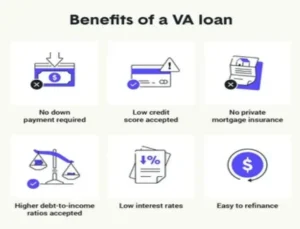
A long waitlist does not mean your only option is sitting still. Many families run their off-base search in parallel with their on-base application, since a strong off-base rental or a VA-financed purchase can move faster than a housing office waitlist at a high-demand installation. MilHousing Network connects you with a vetted, military-savvy agent at your destination, someone who already understands your BAH range, your PCS timeline, and what base housing looks like at your specific installation, so you are not choosing blind between the two paths.
Frequently Asked Questions
Can my spouse apply for military housing on my behalf? Yes. DD Form 1746 allows a spouse to apply with a notarized Power of Attorney. Navy spouses can also begin the process through HEAT using the sponsor’s last name, DOD ID number, and duty location.
How early can I submit my application? As soon as you have your destination assignment, even before final orders are issued in some cases. Complete applications with orders and full documentation attached receive the earliest possible control dates.
Does HEAT put me on the actual waitlist? No. HEAT facilitates early contact and document submission, but the installation housing office manages actual waitlist placement after verifying your eligibility and receiving your complete packet.
What if I need help deciding between waiting for base housing or renting off-base? Compare your specific waitlist estimate against current off-base rental availability near your installation, since some markets move faster than a housing office queue. A local agent familiar with your specific base can tell you which path realistically gets your family settled sooner.
For questions about how far your allowance actually stretches, review BAH basics for housing planning. If purchasing makes more sense than waiting, understanding VA loan basics and running your numbers through a mortgage calculator before you apply anywhere is worth the twenty minutes.
What Should I Do Next
Confirm your destination installation the moment orders are cut, then contact that specific housing office before you do anything else related to your move.
Gather every document on the checklist above in one sitting rather than piecing it together over several days, since a single missing item is what most often delays a control date.
If your waitlist estimate runs long, start your off-base search in parallel rather than waiting to see what happens. Running both paths at once means you are never stuck choosing between an unknown wait and a rushed decision.
Ready to stop guessing and get a real answer for your specific base? Talk to MilHousing Network today. Free for military families, no obligation.