
Retiring From the Military? Here Is What Nobody Tells You About Choosing a State
Funny thing about military retirement. Everyone focuses on the pension, the benefits, finally having your schedule back.
Then reality hits.
Where are we actually going to live?
For a lot of military families, that question is harder than it sounds. You have lived in multiple states. Some you loved. Some you would never go back to. And a few that seemed great during a short visit but would feel very different year round.
Most guides online just compare tax rates, rank some states, and call it a day.
That is not really helpful.
Because the best state for military retirees on paper might not be the best state for your family, your health needs, your budget, or the life you actually want.
That is what we are going to figure out together here.
The Tax Question Is Real, But It Is Not the Whole Story
Let’s start with a number that usually gets people to pay attention right away.
An E 7 with 20 years of service can save somewhere between 2,400 and 3,600 every year just by retiring in a tax exempt state instead of California. An O 5 saves around 4,000 to 6,000 or more annually.
Over a 20 year retirement, that difference can cross 120,000 or more staying in your pocket.
Yeah, that is not a small change.
But this is where a lot of retirees get a bit too confident with the math.
They pick the state with the best tax setup, pack up, move there, and expect everything else to fall in place.
Then reality shows up with things like high homeowners insurance, a VA hospital that is not exactly around the corner, and a cost of living that quietly eats into the savings they were counting on.
Tax benefits are the starting point, not the finish line.
Here is how the map actually looks right now.
37 states fully exempt military retirement pay, either because they have no state income tax or because they have specific protections for military pensions, according to Military.com’s state tax guide.
Nine states sit at zero income tax altogether: Alaska, Florida, Nevada, New Hampshire, South Dakota, Tennessee, Texas, Washington, and Wyoming.
Another 28 states still offer full military exemptions within their income tax systems.
That is a lot of choice on the table, which sounds great until you actually try to pick one.
California is one of the few that does not offer a broad exemption, capping its partial exclusion at $20,000 for eligible retirees under certain income thresholds.
Which honestly surprises nobody who has ever opened a California tax statement and felt their soul leave their body for a second.
If you are stationed there and thinking about staying, it is worth checking your actual pension numbers before making the call.
Not every case turns out the way people assume it will.
The States That Make the Most Sense in 2026
This is not a ranking. A ranking implies that one state is objectively better than another, and that is not how this works. What follows is an honest look at the states that consistently come up for good reasons, along with the real catches that the highlight reels skip.
Florida
Florida draws military retirees in larger numbers than almost anywhere else, and the reasons are legitimate. No state income tax, a genuinely large military community spread across multiple metro areas, and eight VA medical centers across the state give it strong infrastructure that many retirees rely on heavily.
The catch that gets minimized in most guides is insurance. Homeowner’s insurance in coastal counties has become significantly more expensive in recent years, and property taxes vary considerably by county. The version of Florida you find in Pensacola or the Jacksonville area looks quite different financially from what you find in Miami-Dade. Do not pick the state based on the best-case version of it.
Texas
No state income tax, a broad economy that supports second careers in almost any field, and meaningful property tax exemptions for qualifying disabled veterans make Texas a strong financial choice for retirees with a service-connected disability rating.
Texas property taxes at the standard rate are among the highest in the country, which catches people off guard after they factor in the income tax savings. If you qualify for the disabled veteran exemption, that changes the math significantly. If you do not, build the property tax reality into your budget before you fall in love with a house in the Hill Country.
Tennessee
Tennessee eliminated its income tax on personal income in 2021, which means military retirement pay is fully protected. Cities like Nashville, Knoxville, and Chattanooga have been drawing more military retirees looking for the tax benefit without the insurance costs of Florida or the property tax situation in Texas.
Housing is still reasonable in most of Tennessee outside of Nashville’s urban core, and the state has four distinct seasons without the kind of winters that make the Northeast a non-starter for many retirees. It is worth serious consideration if you have been sleeping on it.
Virginia
Virginia fully exempts military retirement pay from state income tax for retirees age 55 and older as of 2025, with the exemption reaching a $40,000 deduction for the 2025 tax year and beyond. Its real advantage is what surrounds the exemption: one of the most developed veteran and defense employment ecosystems in the country, strong VA healthcare access, and proximity to major installations for retirees who want to stay connected to the community.
Northern Virginia is expensive. That is not a caveat, it is a significant financial reality that should redirect you toward Hampton Roads, Richmond, or the southwestern part of the state if cost of living is a serious concern.
North Carolina
North Carolina repealed its tax on military retirement pay in 2022, and the combination of affordable living in most of the state, a strong military community near Fort Liberty and Camp Lejeune, and genuine four-season weather without brutal winters has made it one of the more consistently recommended options.
The western part of the state is beautiful and more affordable, but VA access in rural western North Carolina is limited. If ongoing VA care is part of your plan, the eastern half of the state gives you better options.
South Carolina
South Carolina added a full military exemption in 2025. On a $60,000 pension at a 5% tax rate, that exemption saves $3,000 per year, which over 10 years is $30,000 that stays with you instead of going to the state.
South Carolina has been drawing more attention as Florida and Texas housing costs have risen, and it offers a reasonable combination of tax treatment, cost of living, and coastal lifestyle at a lower price point than most of Florida’s desirable areas.
What VA Healthcare Access Actually Looks Like
The VA healthcare comparison is where the gap between a financially optimal choice and a practically sound one becomes clearest.
Virginia has one of the largest military and veteran healthcare networks in the country, with multiple VA medical centers operating across the state. Florida’s eight medical centers spread across a large state give most areas reasonable access, though urban wait times in South Florida can be a consideration.
States like Alabama and Mississippi fully exempt military retirement pay and have genuinely low costs of living. In rural parts of both states, however, the nearest VA facility can require significant travel time for routine care. If you use VA healthcare regularly, use the VA’s facility locator to map what care actually looks like within a reasonable distance of any area you are seriously considering.
Do not let the tax exemption be the deciding factor if the healthcare access does not match your needs.
Using Your VA Loan Benefit Wisely
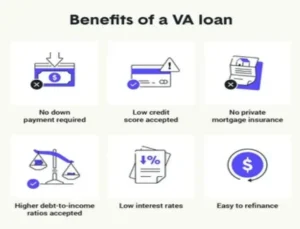
The VA home loan program had a strong year in 2025. VA purchase loans reached 323,835 for the fiscal year, up 8.5% from 2024, and veterans across the country used the benefit to buy homes without a down payment and without private mortgage insurance.
If you have a service-connected disability rating of 10% or higher, the VA funding fee is waived entirely. That saves you between 1.4% and 3.3% of the loan amount upfront depending on your situation.
Some states layer additional savings on top of this through property tax exemptions for disabled veterans. Texas, South Dakota, and Virginia all offer meaningful exemptions that can significantly reduce your annual carrying costs once you own the home. In South Dakota, permanently disabled veterans can receive a property tax exemption up to $150,000.
For current VA loan rates and eligibility details, Veterans United’s VA loan guide is one of the most current and practical resources available.
How to Actually Make This Decision
Here is the honest version of the decision framework.
If protecting your pension income is the top priority, focus on no-income-tax states with manageable property taxes and insurance costs. Tennessee and South Carolina offer strong combinations right now. Florida and Texas require more homework on the local cost picture before you commit.
If VA healthcare access drives the decision, Virginia and Florida have the infrastructure. North Carolina is solid near its major installations. Any rural option in a financially attractive state needs to be verified against actual facility locations before you lean on it.
If you want the lowest total cost of living, Tennessee, Mississippi, and parts of North Carolina and Virginia outside of major metros offer the most favorable combination of tax treatment and housing costs for retirees on a fixed income.
If continuing to work matters to you, Virginia’s defense and federal employment ecosystem and Texas’s broad economy give you the most options across the widest range of fields.
Before you finalize anything, verify the current exemption rules directly with the state’s department of revenue. Laws change, some exemptions have age or service-year requirements, and a decision this significant deserves primary sources. For TRICARE plan availability in any location you are considering, TRICARE’s regional plan finder lets you check coverage before you move.
FAQs
How many states are fully tax-free for military retirement in 2026? 37 states currently exempt military retirement pay entirely, either through no state income tax or through specific legislation protecting military pensions.
Is Florida or Texas the better choice financially? Both have no state income tax. Florida has a stronger VA network and larger military community. Texas offers significant property tax breaks for disabled veterans but has high base property tax rates. The right answer depends on your disability status, where in each state you would live, and what your total cost picture looks like.
Does a VA disability rating affect home buying benefits? Yes. A service-connected disability rating of 10% or higher waives the VA funding fee entirely, which is a meaningful upfront saving. Many states also offer property tax exemptions for disabled veteran homeowners that reduce annual costs significantly.
Can I use a VA loan in any state? Yes. The VA home loan benefit works in all 50 states. Your purchasing power will vary based on local home prices and conforming loan limits.
What is the single most important thing to check before choosing a state? Verify current tax exemption rules directly with the state’s department of revenue. Policies change frequently, some have eligibility requirements that are not widely publicized, and the information in any guide, including this one, can be outdated.
This article is for informational purposes only. Tax laws, VA benefit policies, and TRICARE plan availability change regularly. Verify current rules directly with the relevant agencies before making decisions. This is not financial advice.