

(Amenities, Eligibility, and Assignment Rules)
Military housing looks like two main environments: dorm-style barracks for many unaccompanied service members and neighborhood-style homes for families. The exact layout, privacy, and amenities depend on 3 variables: the installation’s housing inventory, your eligibility rules (rank + dependents), and whether housing is government-run or privatized.
Most people asking “what does military housing look like” want 3 answers fast: what you’ll see inside, what you’ll see outside, and which rules and costs change daily life.
For a branch-neutral overview of on-base living, see the housing resources on Military OneSource.
On-Base Housing Types (Family Housing vs Barracks/Dorms)
On-base housing has 2 primary types: unaccompanied housing (barracks/dormitories) and family housing neighborhoods. Family housing usually comes in 3 common unit styles: single-family homes, duplexes/townhouses, or apartments, based on what the base actually has.
Housing is assigned, not picked from an unlimited menu. Housing offices match you to what you qualify for and what’s available, so the timeline matters.
On-base housing taxonomy (quick scan)
| Housing type | Who it’s for | Typical layout | Typical rules | What varies by base |
| Barracks/dormitories / Unaccompanied Housing (UH/UPH) | Many single members (especially juniors) | Standardized room or module; shared or semi-private facilities | Inspections, guest limits, quiet hours, and room standards | Privacy level, bathroom setup, kitchen access |
| Family housing (single-family, duplex, townhouse, apartment) | Members with dependents (and some exceptions) | Neighborhood streets of homes/townhomes | Occupancy agreement, pet policy, yard rules, maintenance process | Yard size, fencing, amenities, renovation quality |
Barracks / Unaccompanied Housing (UH/UPH) — what it looks like
Barracks look like dormitories: standardized rooms, shared or semi-private bathrooms, and a ‘rules-first’ living environment where privacy depends on the building design. The most accurate description is “structured and consistent”, built to be functional, inspectable, and close to work.
A helpful reference is the Whole Building Design Guide, which explains how barracks/unaccompanied housing are typically planned and organized.
Barracks privacy spectrum (3 common configurations)
| Configuration | Sleeping | Bathroom | Kitchen access | Typical tradeoff |
| Shared room | Shared | Shared | Shared/common | Lowest privacy, simplest logistics |
| Private room + shared bath | Private | Shared (suite/floor) | Shared/common | Better privacy, still communal |
| Private room + shared module | Private | Semi-private | Shared kitchenette/common | More apartment-like, still rules-driven |
On-base family housing neighborhoods — what it looks like
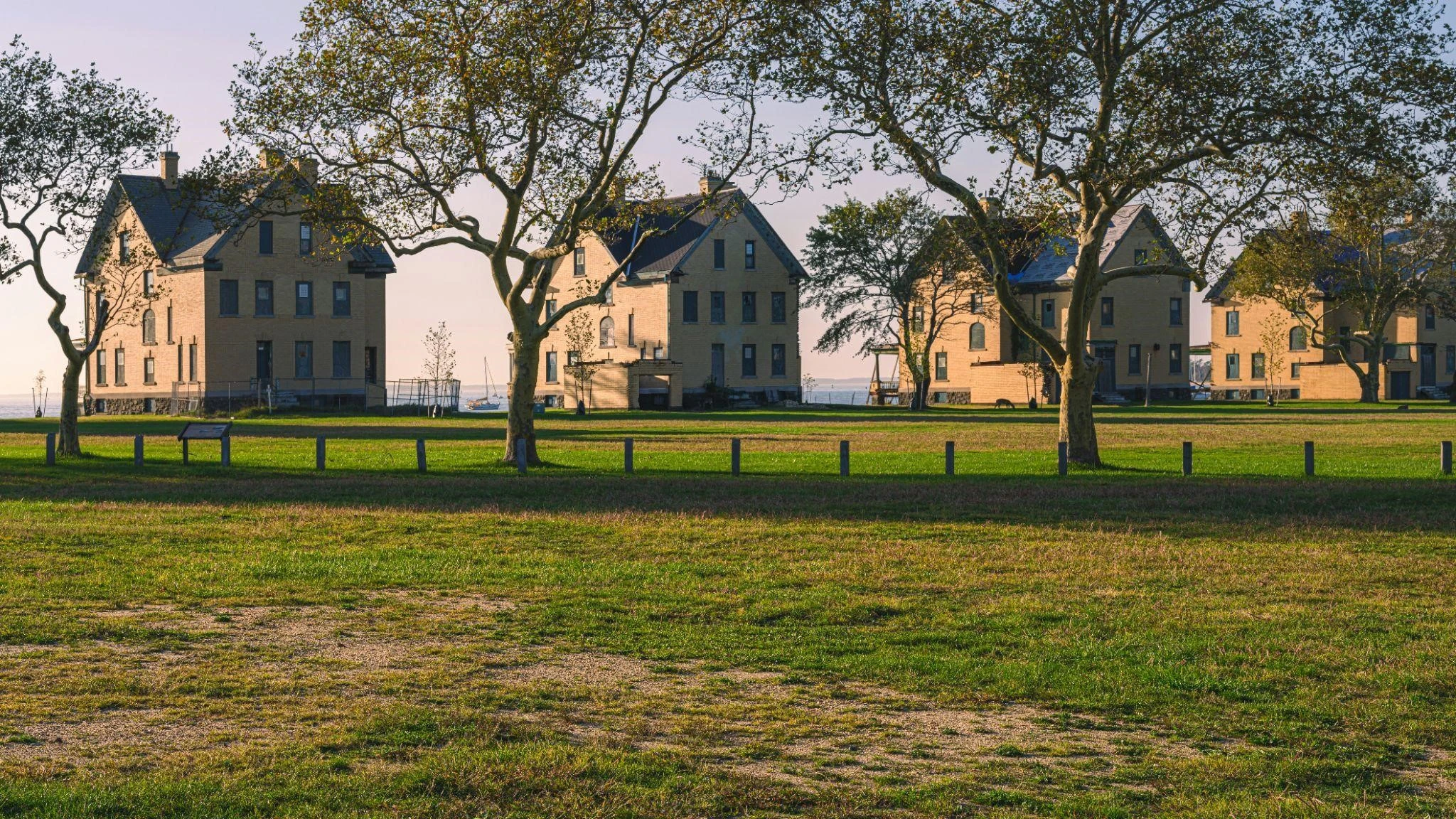
On-base family housing looks like a civilian neighborhood: streets of homes or townhomes near base services. Amenities range from basic to community-style depending on location and provider. Expect practical designs, kid-friendly common areas in many communities, and rules tied to occupancy standards.
What It Looks Like Inside (Room Layout, Furnishings, Storage, Shared Spaces)
Inside military housing, function comes first: sleeping space, storage, and shared facilities. Kitchens, bathrooms, and furnishings differ by housing type and building design.
A helpful mental model is rooms → modules → units: design guides often describe unaccompanied housing as individual rooms grouped into shared modules (kitchen/living) within a larger unit or building.
Interior “visual tour” checklist (7 items)
- Sleeping area: bed space + walkways that stay clear for inspections
- Storage: closet/wardrobe + limited overflow space
- Bathroom setup: shared bathroom vs semi-private suite style
- Kitchen access: shared kitchen, kitchenette, or none in-room
- Laundry: building laundry room, shared laundry, or in-unit (rare in barracks)
- Common area: day room/lounge / shared living module (varies by building)
- Inspection-ready standard: surfaces clear, cleanliness documented, damage reported early
Concrete decision trigger: If a private kitchen is non-negotiable, that single requirement pushes you toward family housing or off-base living.
Typical barracks room configurations (what daily life feels like)
- Dorm-style: shared bathroom down the hall, common kitchen/laundry, strict inspections
- Suite-style: private room with shared bathroom for a small group, common kitchen access
- Module-style: private rooms grouped around a shared kitchenette/living space
Family housing interiors (what to expect, not what to assume)
Family housing interiors generally follow standard residential layouts (living room, full kitchen, bedrooms). Renovation status matters: newer or renovated areas often have better finishes and fewer maintenance issues than older blocks.
What It Looks Like Outside (Neighborhood Design + Amenities)
Outside, family housing communities are built around walkable loops, practical parking, and family amenities. Yard size, fencing, and “extras” vary by provider and the age of the neighborhood.
Most on-base neighborhoods are clean and safe, but many are designed for efficiency, not large lots. Think compact landscaping, shared green space, and rule-based curb appeal.
Exterior amenities checklist (6 features to verify)
| Feature | Common in many bases | Optional (community-specific) | What to verify at move-in |
| Parking | Yes | Assigned vs open parking | Where can you park + guest parking |
| Playground | Often | Distance/condition varies | Proximity + maintenance |
| Pool | Sometimes | Yes | Season + resident access |
| Community center | Sometimes | Yes | Hours + events + services |
| Fenced yard | Sometimes | Yes | Fence type + who maintains it |
| Dog park | Sometimes | Yes | Rules + waste stations |
Who Qualifies for What (Rank, Dependents, Priority, Waitlists)
On-base assignment follows a direct logic: rank/pay grade + dependent status + availability determine eligibility, and waitlist priority decides who gets offered which unit type and bedroom category.
“Who gets what” assignment logic (simple model)
| Pay grade/rank | Dependent status | Availability | Typical outcome | Why this happens |
| Junior | Without dependents | Quarters available | Barracks/UH/UPH | Readiness + inventory logic |
| Any | With dependents | Family units available | Family housing offer | Household size drives unit sizing rules |
| Any | With dependents | Family units limited | Waitlist | Priority queues allocate limited inventory |
| Any | Any | No on-base option | Off-base with BAH/OHA | Allowance supports local market choice |
Why waitlists happen
Waitlists exist because demand exceeds inventory. Three predictable drivers push waitlists up or down:
- Limited unit count (fixed neighborhoods, fixed bedroom mixes)
- Turnover timing
- Priority categories (who must be housed first)
Is On-Base Housing Free? (Costs, BAH/OHA, Utilities)
Barracks often feel “free” because you typically don’t pay rent directly. Family housing is different: many on-base family programs use your housing allowance value (BAH/OHA) as rent, which means you don’t pocket the cash.
For allowance basics, see Defense Travel Management Office.
The cost model (free vs subsidized)
| Housing option | What you pay directly | What you give up | Typical hidden costs | Best-fit situations |
| Barracks/dorms | Often $0 rent | Typically no BAH | Convenience costs (privacy, rules) | Single members prioritizing proximity |
| On-base family housing | Often no separate rent bill | BAH/OHA value used as rent | Fees/policies vary by provider | Families prioritizing commute + stability |
| Off-base renting | Rent to landlord | You manage the budget with BAH/OHA | Deposits, utilities, commute | Those who want choice + space |
| Off-base homeownership | Mortgage + ownership costs | You budget with BAH/OHA | Repairs, taxes, closing costs | Those pursuing long-term equity plans |
Privatized Housing vs Government-Owned (What Changes for You)
Privatized on-base housing changes daily life because a property manager controls maintenance requests, work orders, inspections, and enforcement. Government-owned housing runs through installation processes.
Privatized housing is commonly tied to MHPI, created in 1996, and agreements often run 50 years. For policy background and oversight perspectives, start at Congress.gov and the Government Accountability Office.
Government-owned vs privatized (resident-impact view)
| Topic | Government-owned (typical) | Privatized (MHPI typical) | What to ask at move-in |
| Maintenance | Installation channels | Property manager + work orders | Response standards + escalation path |
| Inspections | Installation-driven | Provider-driven + lease-like rules | Frequency + pass/fail criteria |
| Utilities | Often included/standardized | Varies by community | What’s included vs billed |
| Disputes | Chain-of-command + office | Provider process + oversight | Who resolves disputes and how |
| Documentation | Office records | Work order records | How to track issues over time |
Tenant protections matter here: MHPI communities operate under the United States Department of Defense Tenant Bill of Rights, which sets expectations around safe, quality housing and fair treatment (and strengthens dispute and maintenance transparency).
Rules That Affect Daily Life (Guests, Pets, Modifications, Inspections)
Military housing rules come from occupancy agreements and installation standards. Guest access, pet policy, modifications, and inspection cadence stay consistent in concept but vary by base and provider.
The fastest way to reduce conflict is to treat base housing like a hybrid of lease rules + compliance standards. That’s why assumptions (“it’s just like a normal apartment”) create friction.
Rule categories + what to verify (4 buckets)
| Rule category | Typical rule | What varies | What to document |
| Guests | Limits on overnight stays | Approval process + quiet hours | Written guest policy |
| Pets | Limits and restrictions | Breed restrictions + fees | Pet addendum + vaccination rules |
| Modifications | Changes need approval | Fence rules, fixtures, and wall mounting | Approval emails/forms |
| Inspections/noise | Inspection-ready standards | Frequency + penalty structure | Inspection schedule + notes |
How to Apply and Get Assigned (Housing Office Workflow)
You apply through the housing office: submit documents, receive eligibility and waitlist status, accept an offer, and complete a move-in inspection walk-through before keys.
Use this as an executable process, not a vague guideline.
A branch example for how housing offices structure services and guidance can be found through the Army’s housing portal: Housing.Army.mil.
Base housing workflow (8 steps)
- Receive PCS orders and identify the gaining installation
- Contact the housing office early (not after arrival)
- Submit the application and required documents
- Receive eligibility determination and bedroom category
- Enter the waitlist (with the correct effective date/control date)
- Receive an offer and decide within the response window
- Complete the walk-through and move-in inspection
- Submit work orders immediately and keep a photo log
Move-in inspection checklist
- Walls/paint
- Floors
- Windows/screens
- HVAC
- Plumbing
- Appliances
- Doors/locks
- Exterior/yard
Fast Visual Checklist: What You’ll Likely See (Barracks vs Family Housing)
Use this checklist to predict what you’ll actually see—privacy, kitchens, inspections, guests, pets, and storage—before you arrive.
| Category | Barracks/dorms | Family housing |
| Privacy | Lower, varies by room setup | Higher, household-based |
| Kitchen access | Shared or limited | Full kitchen typical |
| Utilities | Often included | Often included or structured by the provider |
| Inspections | Frequent and strict | Regular, more home-like |
| Guests | Tight limits | Rules still apply, but are more flexible |
| Pets | Limited, policy-driven | Allowed with restrictions |
| Storage | Limited | More storage typical |
| Parking | Standard lots | Driveway/assigned parking varies |
Closing: Decide with a clear housing plan
Military housing becomes predictable when you evaluate 4 variables: housing type, privacy level, cost model (BAH/OHA), and rule enforcement. The best move is not guessing what you’ll get; it’s planning around what you can control.